Seismic protection for mission-critical data centers must be designed around the actual equipment loads, movement envelope, rack anchorage, floor structure and connected utilities. Compare three distinct solution types.
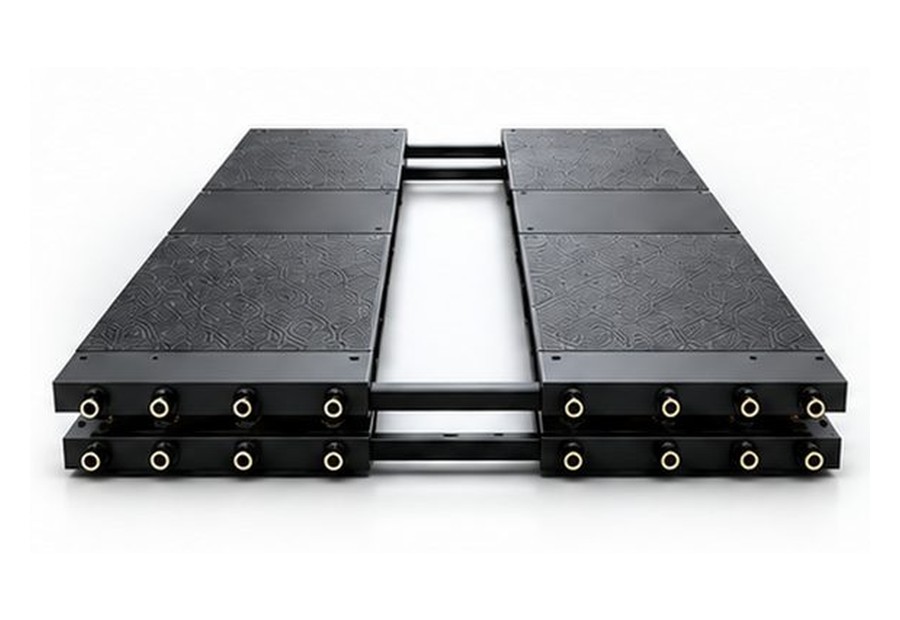
Designed for rack cabinets and other heavy IT equipment, SP6000 uses a bearing-and-plate isolation mechanism to respond in multiple horizontal directions. It can be selected where protection of a particular rack is needed and replacing the raised-floor system is impractical.
Maximum movement
200 mm
Nominal model height
78 mm*
Design load class
Over 3,000 kg*
Horizontal direction
360° response
Practical selection requires a review of rack weight, rack dimensions, anchorage, adjacent clearances and cable / coolant movement. Manufacturer publications also refer to 76 mm in their height description; final dimensions must be confirmed by submodel drawing.
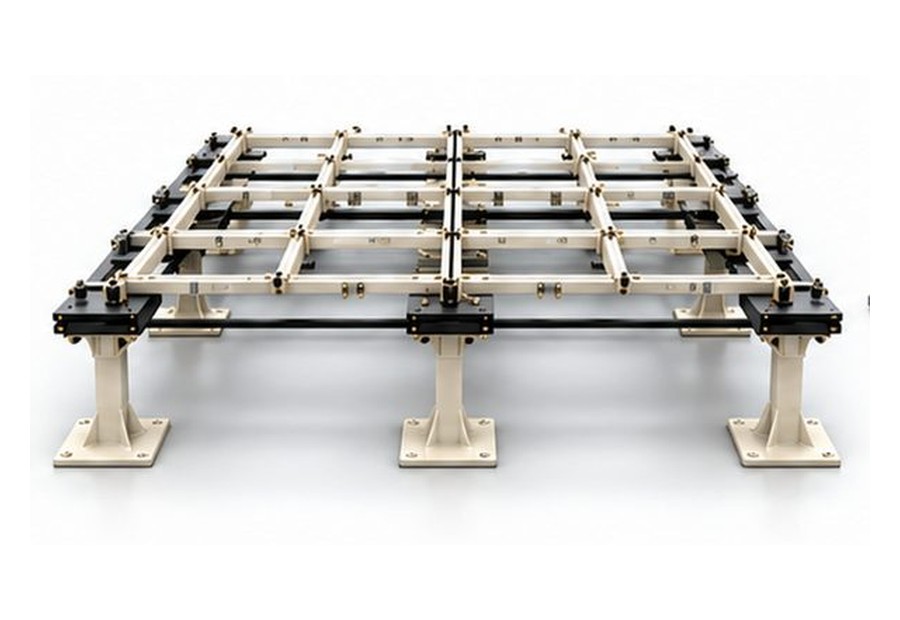
SP9000N introduces seismic isolation at the raised-floor level, with a modular support structure that can be planned around larger data-center equipment zones. The design accommodates staged changes and integration with existing pedestals where the project permits.
Module footprint
1,200 × 1,200 mm
Floor height
300 mm and above
Design maximum
Over 5,000 kg / 1.44 m²*
Maximum displacement
200 mm
Design maximum and allowable working load are not interchangeable. Concentrated loads, pedestal configuration, access clearances, grounding and connected utilities require engineering review.
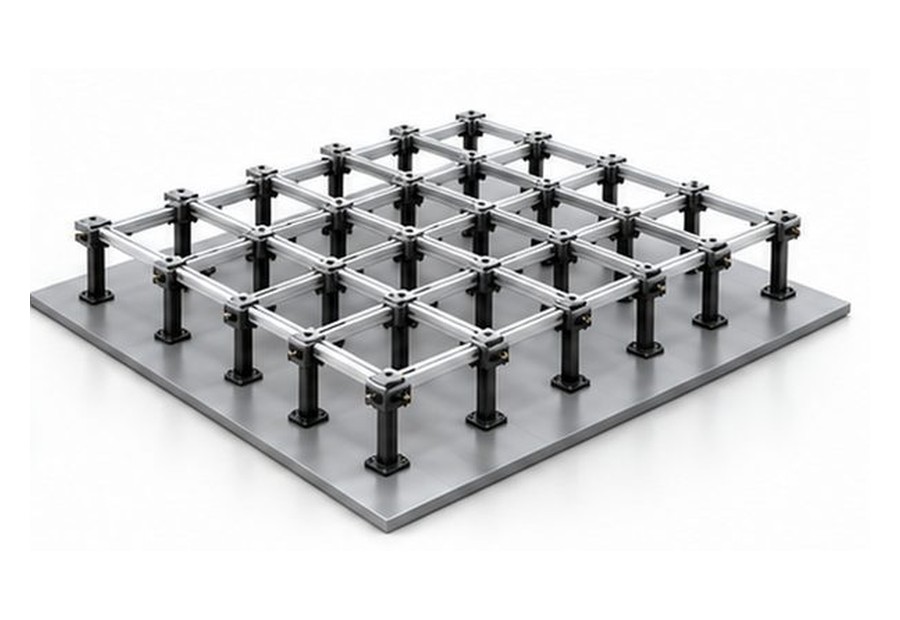
QAF1000 is an earthquake-resistant raised-floor support platform intended for high equipment loads. Its geometry and finishes can be adapted to room layout and maintenance needs. It provides a strong support structure, but should not be confused with the motion-isolation function of SP6000 or SP9000N.
Support spacing
600–1,800 mm
Raised-floor height
300–1,500 mm
Load capacity reference
≥ 5,000 kg/m²*
Panel options
Wood, steel, steel-concrete, aluminium
Panel choice, fastening, lateral bracing, concentrated load and floor-height criteria must be checked against the actual building and equipment design.
Determine the loaded weight of racks, batteries, consoles and equipment, including concentrated and dynamic loads.
02
Movement clearances
Allow for the design displacement envelope and separation from nearby structures or fixed equipment.
03
Building and anchorage
Verify the base slab, raised floor, pedestal interfaces, restraints and site-specific earthquake demand.
04
Connected utilities
Coordinate power, fiber, grounding and coolant connections to tolerate relative movement.
05
Test scope and acceptance
Check the applicable test report for the selected model, load case, installation arrangement and required standard.
Technical qualification: Published specifications are reference values. They do not mean every possible system configuration has the same allowable load or a blanket GR-63-CORE Zone 4 certification. Request the relevant model's test documentation and project-specific engineering assessment.
SETEK · CRITICAL IT PROTECTION
Protect the infrastructure. Preserve operational continuity.
Share your rack layout, load schedule, floor plan and installation conditions to begin a practical seismic-system selection.